What is Industrial Roofing?

Industrial Roofing 101

The basics of the Industrial Roofing Industry

INDUSTRIAL: Anything having to do with business or manufacturing products.

ROOF: The exterior surface and its supporting structures on the top of a building.

INDUSTRIAL ROOFING: Are any repairs, restoration, replacement, or management of an industrial roof system.  

Types of Industrial Buildings: 
(examples listed below)

Manufacturing Plants

Factories

Warehouses
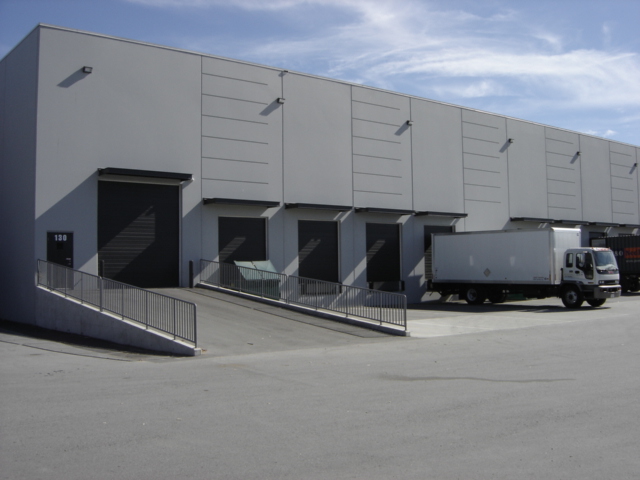
industrial warehouse


Industrial roofing is any roofing activities that take place on industrial buildings. A residential roofer works on individually owned homes, while an industrial roofer works on large industrial owned buildings. Closely related would be a commercial roofer, who works on any commercial owned property. Industrial and commercial roofers usually work with similar type of roof systems, and the two are often associated with one another. Institutional roofers are mentioned less than industrial and commercial roofers, but often work on flat roofs. The greatest difference between the three is the type of facilities they work on.

Public commercial buildings and Industrial building – these buildings are usually low-sloped roof systems, which are most commonly referred to as “flat” roofs. Steep-sloped roofing systems are the most common roof found on residential houses. It takes completely different skill sets for a roofer to work on the various types of roofing systems.

Read More
Industrial Spending up 15%

Research shows April planned capital spending for U.S. and Canada industrial projects gained about 15 percent. The two nations totaled $40.69 billion compared to $35.30 billion in March. The research organization reported a combined 303 planned U.S. and Canadian projects for the month.

Planned project investment in the U.S. was $19.61 billion, which is an 11 percent jump from the March total of $17.52 billion. Canadian investment of $21.08 billion was 18 percent higher than the March total of $17.78 billion in planned capital spending. Projects in both nations ranged in value from $800,000 to $7.5 billion.

Energy projects led in the U.S. with $8.20 billion in planned investment, with process projects coming in at $7.66 billion. Manufacturing facility projects represented $1.99 billion in planned U.S. spending.

Energy projects led in Canada as well, representing $10.73 billion in planned spending for the month. Process facilities accounted for $9.81 billion in planned investment.

For the second straight month, California was the U.S. investment leader with $3.68 billion in planned spending, followed by Texas with $3.33 billion and Louisiana with $1.51 billion.

In Canada, Alberta led the provinces and territories again with $8.12 billion in planned project investment for the month, followed by Labrador with $7.5 billion and Nunavut with $4.1 billion.

Texas was the U.S. project activity leader in April with 34 planned projects. North Carolina reported 17 planned projects while California reported 14.

Ontario was the Canadian leader in project activity for the month with 16 planned projects. Alberta had ten planned projects and British Columbia had four.

Industrial Projects Researched
- Manufacturing Facilities
- Process Facilities
- Chemical Process Facilities
- Food Processing Facilities
- Research & Development Laboratories
- Distribution Facilities
- Energy Facilities
- Industrial Buildings
- Industrial Equipment Installation
- Water/Wastewater Treatment Facilities
- Solid Waste Facilities
- Plant Dismantlements

Read More

Roof Mops used on industrial roofs

The application of hot asphalt to built-up roofs is done with roof mops.

Types of Roof Mops

Cotton Mops - used for industrial roofing are usually around three pounds, but can vary in weight. The durability of the mops depend on the quality of the mop being used. The harder the mop the better, soft mops are easily destroyed by hot asphalt. A industrial roofer can expect to use three or more mops on a large industrial roof. After a short time in hot asphalt, the cotton will begin to deteriate.

Fiberglass Mops These mops are better than cotton mops, because they don’t burn up. Fiberglass mops can be used for 2-3 days before replacement. Hot asphalt will heat up to well over 600 degrees, but fiberglass can resist heat up to 1500 degrees. Fiberglass roof mops are non-absorbent, which allow asphalt to flow off the strand easier than cotton.

Read More

Industrial Cladding

Metal Roof Cladding

Roof cladding is such an integral part of many industrial building. The key is to find a system that is durable, and can withstand harsh industrial conditions.

Mini Orb - is a high tensile steel profile sheet that is commonly used for decorative finishes. It is suitable for external and internal applications, on curved and straight surfaces.

Spandek – industrial application used for roofing. It features a strong nine rib design, which provides maximum strength.

Corrugated This application is well known for being one of the most durable material in the industry. Commonoly used for industrial roofing. (common sizes .42 and .48)

Trimdek – This product has a modern look and is commonly used for roofing and wall clading.

Read More

Industrial Roofing Trends: TPO

TPO (Thermoplastic)

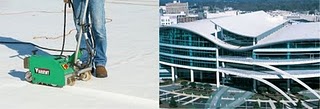
TPO (Thermoplastic polyolefin ) Roof Membranes are becoming more and more poplular in the industrial roofing industry. There are some great explanations for this. 

TPO is a highly reflective energy efficient roof systems, which translates into lower energy costs for business owners. TPO is actually the fastest growing segment in both the commercial and industrial roofing industry. This is especially true for warm southern climates, where energy efficient roof systems are frequently replacing inefficient out of date roof systems. Furthermore, thermoplastic polyolefin roofing membranes are much more cost effective today than they were a few years ago.

TPO Membrane

TPO membranes provide strength and durability that can withstand harsh industrial conditions, and are highly resistant to wind and hail. No matter how you look at it TPO is an excellent roof system, and will only continue to grow in popularity in the industrial industry.

Read More

Industrial Metal Roofs

Metal Roofs

Metal Roofs in the Industrial Industry

Metal Roof - Industrial

Metal roofs are often used to cover large industrial buildings because of their high strength to weight ratio. Stainless Steel roofs are often found on industrial buildings, and are valued for the ability to withstand harsh industrial conditions. Corrugated galvanized steel – the original product that was iron steel sheet coated with zinc and then roll formed into corrugated sheets. Galvanized steel is still being used  today in many areas, but is becoming less popular due to the new “green” trend in today’s construction industry.

Roof Restoration over Replacement

Many business owners are choosing to restore their metal roofs with roof coatings. Roof coatings can help waterproof, rustproof, and extend the life of a metal roof at a fraction of the cost of a roof replacement. Roof coatings can also be used to reflect the suns UV Rays;  this makes the roof more energy efficient and reduces overall energy costs.

Read More